
Hair loss is a common concern that can affect both men and women, often developing gradually through thinning hair, increased shedding or a receding hairline. Choosing the right Hair Loss Treatment starts with understanding why these changes occur and how they affect the hair follicles. Factors such as genetics, hormonal changes, stress and scalp conditions can all contribute to hair thinning.
At Dr Jon Yong Aesthetic Clinic, hair restoration involves a range of medical and non-surgical approaches, depending on the underlying cause and pattern of hair loss. Treatment options may include oral medication, laser technology and other procedures designed to support follicle health and hair growth. However, not all types of hair loss have the same causes or respond to the same treatments. Understanding how hair grows, why follicles become weaker and how different treatment approaches work can help individuals make more informed decisions about their hair health.
What Causes Hair Loss?
Hair grows through a natural cycle involving growth, transition and resting phases. Individual strands eventually shed, allowing new hair to develop from the follicles. However, when this cycle becomes disrupted, shedding may increase or hair growth may gradually become weaker.

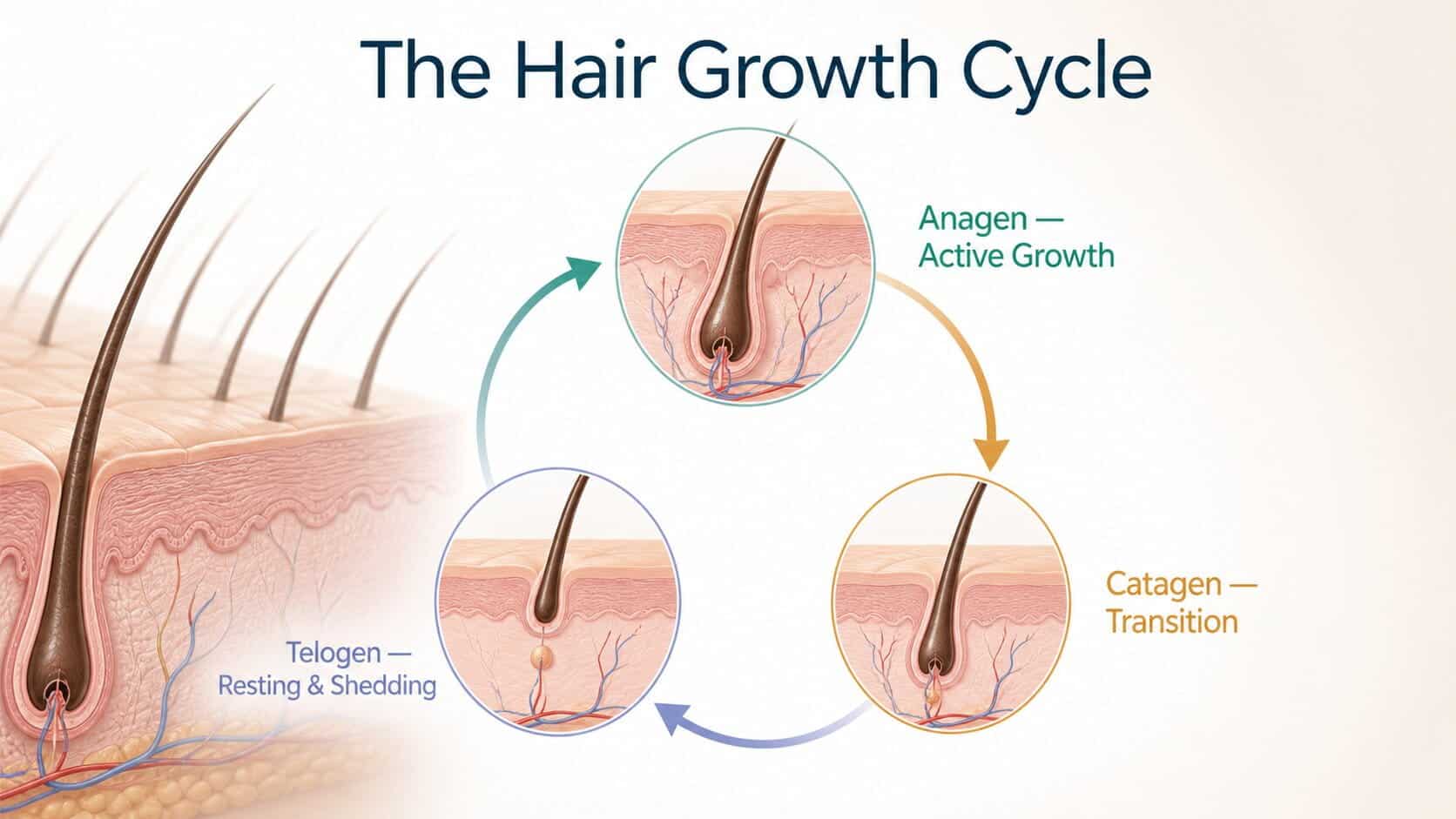
Several factors can contribute to these changes.
1. Genetic Factors and Pattern Hair Loss
Genetics plays a significant role in male and female pattern hair loss, medically known as androgenetic alopecia. This condition develops when hair follicles become sensitive to androgens, which are hormones that influence hair growth.
Over time, affected follicles gradually shrink, producing finer and shorter strands. Men may notice a receding hairline or thinning around the crown, while women commonly experience reduced density across the top of the scalp.
2. Hormonal Changes
Hormonal fluctuations can influence the hair growth cycle. Changes associated with pregnancy, childbirth, menopause and certain medical conditions may contribute to increased shedding or gradual thinning.
Postpartum hair loss, for example, can occur when hormone levels change after childbirth. Although this shedding is often temporary, persistent thinning should be assessed to identify other possible contributing factors.
3. Stress and Lifestyle Factors
Physical or emotional stress can affect normal hair growth. Significant illness, surgery, sudden weight changes and prolonged stress may trigger a condition called telogen effluvium.
This happens when more hair follicles than usual enter the resting phase, resulting in noticeable shedding. Nutritional deficiencies, particularly insufficient iron or protein, may also affect healthy hair growth.
4. Scalp Conditions and Hair Care Habits
Scalp inflammation, fungal infections and certain skin conditions can interfere with healthy hair growth. Repeated use of harsh chemical treatments, excessive heat styling and hairstyles that pull tightly on the roots may also contribute to hair damage or hair loss.
Identifying these factors helps determine whether the concern requires medical attention, changes in hair care habits or a suitable restoration approach.
Understanding Different Types of Hair Loss
Recognising the pattern of hair loss can provide useful information about its possible cause.
Some common types include:
Male pattern hair loss: Usually involves a receding hairline, thinning around the temples or reduced density at the crown.
Female pattern hair loss: Often appears as gradual thinning across the top of the scalp, sometimes accompanied by a widening part.
Postpartum hair loss: Increased shedding following childbirth due to hormonal changes.
Telogen effluvium: Temporary excessive shedding associated with physical stress, illness, nutritional changes or emotional pressure.
Alopecia areata: An autoimmune condition that can cause sudden, round patches of hair loss.
These conditions require different considerations. A treatment that may support hereditary thinning is not necessarily suitable for an autoimmune condition or an active scalp infection.
How Is Hair Loss Assessed Before Treatment?
Before choosing a procedure, it is important to understand what is happening beneath the scalp. A proper assessment helps distinguish between temporary shedding, gradual follicle miniaturisation and other conditions that may require medical management.
A consultation may involve several steps.
Reviewing Medical and Hair History
A practitioner may ask when the shedding started, whether it has progressed and whether there is a family history of hair thinning. Information about recent illness, medication, hormonal changes and lifestyle can also help identify possible triggers.
Examining the Scalp and Hair Density
A scalp examination helps identify areas of reduced density, visible thinning, inflammation or changes in hair texture. The condition of existing follicles is particularly important when considering procedures intended to support hair regeneration.
Identifying Possible Underlying Conditions
If the pattern suggests an underlying medical issue, further assessment may be recommended. Depending on the symptoms, this could include blood tests to investigate iron levels, thyroid function or nutritional deficiencies.
Finding the underlying cause matters because treating the visible thinning without addressing its source may not provide lasting improvement.
What Are the Available Hair Restoration Procedures?
There are several approaches to managing hair thinning. The most suitable option depends on the diagnosis, the condition of the follicles and the individual’s expectations.
1. Non-Surgical Laser Hair Restoration
Laser-based restoration is an option for individuals experiencing certain forms of early hair thinning. It uses controlled light energy to interact with the scalp and support activity within weakened hair follicles.
The hair restoration procedure offered by Dr Jon Yong Aesthetic Clinic uses laser technology to target dormant follicles. According to the clinic, the energy stimulates cellular responses within the scalp, encourages circulation around hair follicles and supports regeneration without intentionally damaging surrounding tissue.
The intended benefits include:
Supporting natural hair growth.
Encouraging scalp regeneration.
Improving the condition of weakened follicles.
Addressing certain patterns of early hair thinning.
Supporting hair restoration for both men and women.
The approach may be considered for localised balding, pattern hair loss and early thinning associated with androgenetic alopecia or hormonal fluctuations.
However, laser procedures are not suitable for every cause of hair loss. Their effectiveness depends on the condition of the follicles and the individual’s response to treatment.
2. Medication-Based Approaches
Certain medications may help manage hereditary hair thinning. Minoxidil is one commonly used option that can support hair growth and help reduce further thinning in suitable individuals.
Other prescription treatments may be considered depending on the patient’s gender, medical history and underlying condition. These medications have different mechanisms and potential side effects, so professional advice is important before starting them. Medication may also be combined with other approaches when clinically appropriate.
3. Radiofrequency Microneedling
Radiofrequency microneedling combines fine needles with radiofrequency energy to deliver controlled heat into the deeper layers of the scalp. This stimulates the body’s natural wound-healing response and supports collagen production. It may help improve the scalp environment and can be considered as part of a treatment plan for certain types of hair thinning. Suitability depends on the individual’s scalp condition and hair loss pattern.
4. Exosome Therapy
Exosome therapy is an emerging approach being explored for hair restoration. Exosomes are tiny extracellular vesicles that carry biological signalling molecules involved in cell communication. In hair restoration research, they are being investigated for their potential role in supporting follicle activity and the scalp environment. However, clinical evidence remains limited, and treatment availability and regulatory status vary by location.
5. Hair Transplant Procedures
A hair transplant is a surgical option for selected individuals with established pattern hair loss. It involves moving hair follicles from a donor area, usually the back or sides of the scalp, into areas with reduced density.
Unlike non-surgical approaches, transplantation physically relocates follicles. Suitability depends on donor hair availability, the pattern of hair loss and overall scalp condition.
What Happens During a Non-Surgical Laser Procedure?
Understanding the process can make the experience less unfamiliar for someone considering laser restoration. Although the exact protocol depends on the equipment and clinical assessment, the general approach involves directing controlled laser energy towards selected areas of the scalp.
At Dr Jon Yong Aesthetic Clinic, the treatment is described as a non-surgical procedure that targets dormant hair follicles. Its intended action involves encouraging cellular activity, improving circulation and supporting the regeneration of weakened follicles.
Unlike surgical transplantation, this approach does not involve extracting or relocating hair follicles. It aims to support existing follicles that may still retain the potential for growth. A consultation is important to determine whether the scalp condition is suitable and whether additional investigation or treatment may be needed.
What Results Can You Realistically Expect?
Results depend on several factors, including the cause of hair loss, follicle health, the extent of thinning and the chosen procedure. For individuals with early pattern hair loss, supporting weakened follicles may help improve hair density and appearance. Some may notice reduced shedding or changes in hair thickness, while others may experience limited improvement. It is important to understand that dormant follicles and permanently damaged or inactive follicles are not the same. If a follicle has undergone advanced shrinkage or is no longer capable of producing hair, a non-surgical laser procedure may not restore growth in that area.
Several factors influence the outcome:
Stage of hair loss: Early thinning may offer more opportunities to support existing follicles.
Underlying cause: Genetic, hormonal, nutritional and autoimmune conditions respond differently.
Follicle condition: The presence of viable follicles influences the potential for regrowth.
Individual response: Biological differences mean that results are not identical for everyone.
Ongoing management: Some forms of hair loss require continued attention to maintain improvements.
A realistic assessment should focus on achievable improvements rather than promises of complete restoration.
How Can You Support Healthy Hair Between Treatments?
Professional procedures are only one part of maintaining healthy hair. Everyday habits can also influence scalp condition and hair quality.
Consider the following practical measures:
Maintain balanced nutrition: Include adequate protein, iron-rich foods and other essential nutrients in your diet.
Avoid excessive heat styling: Frequent use of high-temperature styling tools can weaken hair strands and increase breakage.
Choose gentle hair care products: Use suitable shampoos and conditioners that do not irritate your scalp.
Avoid tight hairstyles: Repeated tension around the roots may contribute to traction-related hair loss.
Manage ongoing stress: Regular physical activity, adequate rest and relaxation can support general wellbeing.
Address scalp concerns: Seek professional advice if you notice persistent itching, scaling, redness or irritation.
Supplements should not be taken indiscriminately. Excessive amounts of certain nutrients can sometimes worsen hair loss, so deficiencies should be assessed before supplementation.
Choosing Suitable Hair Loss Solutions in Singapore
Finding an appropriate approach involves more than selecting a popular procedure. Individuals should understand the technology being used, the type of hair loss it is intended to address and the limitations associated with the treatment.
When exploring hair loss solutions in Singapore, consider these important questions:
Does the clinic assess the underlying cause of hair thinning before recommending a procedure?
Is the treatment suitable for the current condition of your hair follicles?
What improvements can reasonably be expected?
Are there any possible side effects or treatment limitations?
Could additional medical assessment or another approach be more appropriate?
Dr Jon Yong Aesthetic Clinic offers non-surgical laser hair restoration for individuals experiencing certain types of hair thinning. Its approach focuses on supporting existing follicles rather than surgically replacing them. An informed consultation allows individuals to understand whether this option matches their hair concerns and personal expectations.
Conclusion
Hair loss can result from genetics, hormonal changes, stress, nutritional deficiencies or scalp conditions. Identifying the underlying cause is essential before choosing a treatment.
Non-surgical laser hair restoration may help people with early thinning and active but weakened follicles. Dr Jon Yong Aesthetic Clinic offers laser-based treatments designed to support scalp health and encourage hair growth in suitable individuals. Understanding the procedure and its limitations can help you make an informed decision about your hair restoration options. Explore whether laser hair restoration is right for you. Contact us today to arrange a consultation with Dr Jon Yong Aesthetic Clinic and discuss your hair concerns.
