
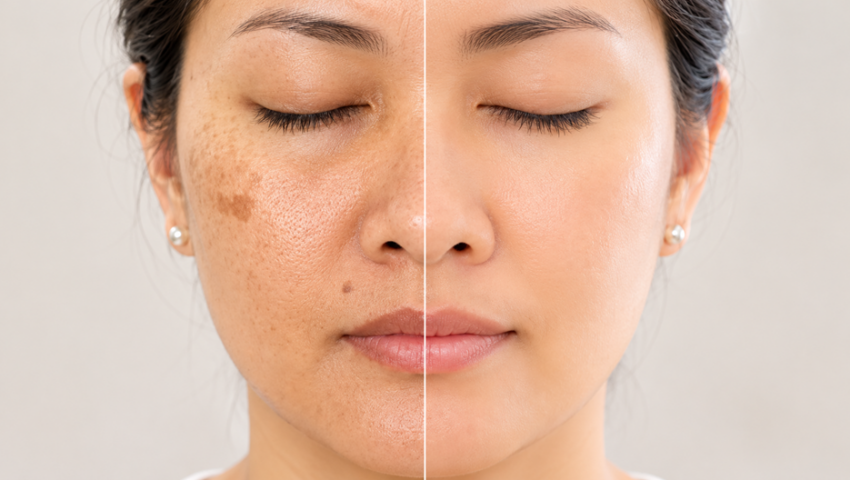
Facial pigmentation is a common skin concern that causes dark spots, uneven patches and changes in skin tone. It can develop due to sun exposure, hormonal changes, ageing or inflammation caused by acne. While pigmentation mainly affects skin colour, acne breakouts can also leave lasting marks and changes in skin texture. Understanding these differences is important when considering suitable skincare and professional procedures. Options such as acne scar treatment may help improve the appearance of depressed scars left behind by severe acne. At Dr Jon Yong Aesthetic Clinic, different acne scar concerns are assessed to determine suitable approaches, including TCA CROSS and subcision. Understanding the causes and types of pigmentation can help you make more informed decisions about maintaining healthy-looking skin.
What Is Facial Pigmentation?
Facial pigmentation refers to changes in the natural colour of the skin caused by variations in melanin production or distribution. Melanin is the pigment responsible for giving skin its colour. Specialised cells called melanocytes produce melanin and help protect the skin against ultraviolet (UV) radiation. When these cells produce excess pigment or distribute it unevenly, darker patches and spots may develop. This condition is commonly known as hyperpigmentation.
Pigmentation can appear on the forehead, cheeks, nose, upper lip and chin. Some spots remain localised, while other conditions create broader patches across the face. It is also important to distinguish pigmentation from acne scarring. Flat brown marks left after breakouts are usually related to post-inflammatory hyperpigmentation. Depressed or raised areas indicate changes in the skin’s structure and may require a different approach.
Common Causes of Facial Pigmentation
Several internal and external factors can influence melanin production. Identifying the possible cause makes it easier to understand why pigmentation develops and how to manage it.
1. Sun Exposure
Ultraviolet radiation stimulates melanocytes to produce more melanin. This natural response helps protect the skin, but repeated exposure can contribute to uneven pigmentation, dark spots and sun-related skin changes.
Spending time outdoors without suitable sun protection can make existing marks more noticeable. Visible light may also aggravate certain pigmentation conditions, particularly melasma.
2. Hormonal Changes
Hormonal fluctuations can influence melanin production. Pregnancy, hormonal contraception and other hormonal changes are commonly associated with melasma.
This explains why some people notice brown patches developing across their cheeks, forehead or upper lip during particular stages of life. Hormonal pigmentation can be persistent and may become more noticeable following sun exposure.
3. Acne and Skin Inflammation
Inflammatory skin conditions can leave dark marks even after the original problem has settled. Acne is a common trigger because inflammation can stimulate excess pigment production during the skin’s healing process.
Picking, squeezing or scratching pimples may increase irritation and contribute to further discolouration. However, not every mark left by acne is pigmentation. Deeper inflammation can also damage supporting skin tissue and create permanent-looking depressions.
4. Ageing and Environmental Factors
Natural ageing and accumulated sun exposure can contribute to age spots and uneven skin tone. Pollution, repeated irritation and unsuitable skincare products may also affect overall skin condition. Using harsh products without considering individual skin sensitivity can trigger inflammation, which may subsequently lead to pigmentation.
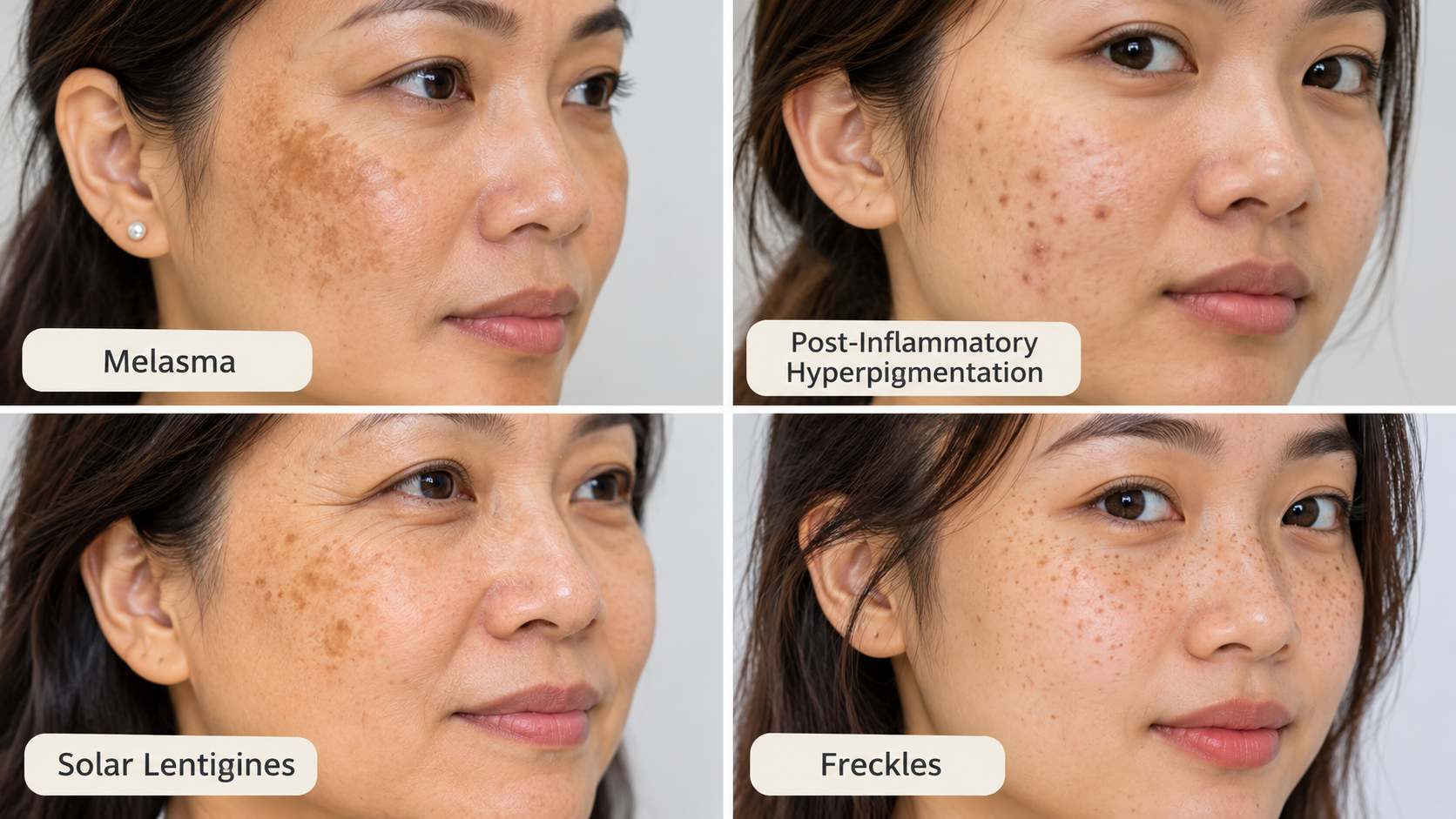
Different Types of Facial Pigmentation
Not all dark spots develop for the same reason. Recognising the different types helps explain why some marks respond to basic skincare while others require professional assessment.
1. Melasma
Melasma appears as brown or grey-brown patches, commonly across the cheeks, forehead, bridge of the nose and upper lip. It often develops in a symmetrical pattern on both sides of the face.
Hormonal influences and sun exposure are important contributing factors. Melasma can affect different skin types and may become more noticeable after spending time outdoors.
2. Post-Inflammatory Hyperpigmentation
Post-inflammatory hyperpigmentation (PIH) develops following inflammation or injury to the skin. Acne, eczema, irritation and certain skin procedures can trigger this response.
The resulting marks can range from light brown to dark brown or grey, depending on the individual’s skin and the depth of the pigment.
People with darker skin tones may be more prone to noticeable PIH. These marks are flat and differ from textured acne scars.
3. Solar Lentigines
Solar lentigines are commonly known as sunspots or age spots. They appear as flat, clearly defined brown patches on areas regularly exposed to sunlight.
They are associated with accumulated UV exposure and commonly develop on the face, hands and other exposed areas. Any new or changing pigmented spot should be assessed rather than automatically assumed to be a sunspot.
4. Freckles
Freckles are small, flat brown spots that are often influenced by genetics and sun exposure. They may become more visible after spending time outdoors and less noticeable when sun exposure decreases.
Unlike some other forms of pigmentation, freckles often develop earlier in life.
Pigmentation Marks vs Acne Scars: Understanding the Difference
One of the most common points of confusion is whether a dark mark left after acne is pigmentation or a scar. Although both can develop following breakouts, they involve different changes within the skin.
Pigmentation marks:
Usually appear as flat brown, reddish or greyish areas.
Develop because of inflammation and changes in pigment production.
Do not create a noticeable depression or raised texture.
May gradually become less visible with suitable skincare and professional guidance.
Acne scars:
Can appear as depressions, pits or raised areas.
Develop when inflammation damages the skin’s supporting tissue.
May involve changes in collagen production and tissue repair.
Often require procedures that address the altered skin structure.
The distinction matters because a cream designed to improve uneven skin tone will not necessarily correct depressed scars. An appropriate acne scar treatment should be selected according to the type, depth and appearance of the scarring.
How Can Facial Pigmentation Be Prevented?
Although not every pigmentation condition can be completely prevented, following a consistent skincare routine and understanding the right approach through an Acne Care and Treatment Guide can help reduce common triggers, manage acne-related inflammation and maintain a more even complexion.
Follow Daily Sun Protection
Sun protection is one of the most important steps in managing pigmentation.
Apply broad-spectrum SPF 30 or higher sunscreen every morning.
Reapply sunscreen during extended outdoor exposure.
Wear a wide-brimmed hat and seek shade when sunlight is strong.
Consider tinted sunscreen containing iron oxides if melasma or visible-light sensitivity is a concern.
Choose Gentle Skincare Products
A suitable skincare routine should support the skin barrier rather than repeatedly irritate it. Choose products according to your skin type and introduce active ingredients carefully.
Ingredients such as niacinamide, vitamin C and azelaic acid may help address uneven skin tone. However, individual suitability varies, and professional advice is useful when pigmentation is persistent or sensitive skin is involved.
Avoid Picking or Squeezing Pimples
Touching or squeezing acne lesions can increase inflammation and raise the risk of post-inflammatory marks. Allowing blemishes to heal without unnecessary irritation is a useful preventive habit.
Managing active acne appropriately can also reduce the likelihood of developing further pigmentation and structural scarring.
Maintain a Consistent Routine
Frequent product changes and excessive exfoliation can disrupt the skin barrier. A simple routine involving gentle cleansing, moisturising and sun protection is generally a more sensible starting point than combining multiple strong products.
Professional Approaches to Acne Scarring
When acne leaves permanent changes in skin texture, professional assessment can help determine which procedures may be suitable. The treatment approach depends on whether scars are depressed, raised or associated with other skin concerns. Dr Jon Yong Aesthetic Clinic lists various procedures for improving the appearance of depressed acne scars: TCA CROSS, subcision, Pico Laser , Radiofrequency and Microneedling.
TCA CROSS
Trichloroacetic Acid Chemical Reconstruction of Skin Scars (TCA CROSS) is a targeted procedure used for certain types of atrophic acne scars, particularly narrow, deep ice-pick scars. The procedure involves applying a high concentration of trichloroacetic acid directly to individual scar depressions. This creates a controlled local response that encourages collagen formation during the healing process. As new collagen develops, the appearance of selected depressed scars may improve. Suitability depends on the scar type and individual skin characteristics.
Subcision
Subcision is a minimally invasive procedure used to improve depressed acne scars. A specialised needle releases the fibrous bands pulling the skin downwards, allowing the area to lift and encouraging collagen production during healing. It is suitable for selected tethered scars following professional assessment. These procedures target acne-related texture changes rather than pigmentation. To understand which approach suits your skin concerns, Book an Appointment with Dr Jon Yong Aesthetic Clinic for a professional assessment.
Pico Laser
Pico Laser uses ultra-short laser pulses to target specific areas of the skin. Depending on the technology and treatment settings, it may help improve uneven skin texture, pigmentation and the overall appearance of acne scars. It can be considered as part of an acne scar treatment plan following a professional skin assessment.
Radiofrequency Microneedling
Radiofrequency Microneedling combines tiny needles with radiofrequency energy to deliver controlled heat into the deeper layers of the skin. This process stimulates collagen production and supports skin remodelling, which may help improve the appearance of depressed acne scars, uneven texture and skin irregularities.
How to Build a Suitable Skin Care Plan
A good skincare plan should reflect the actual cause of discolouration rather than treating every dark spot in the same way.
The following considerations can help guide a more informed approach:
Identify the concern: Determine whether the marks are related to melasma, sun exposure, acne inflammation or structural scarring.
Consider skin sensitivity: Avoid ingredients and procedures that may cause unnecessary irritation.
Address active acne: Managing breakouts can help reduce further inflammation and the development of new marks.
Prioritise sun protection: Consistent protection helps limit additional pigment formation and worsening discolouration.
Seek professional assessment: Persistent, unusual or changing pigmentation should be evaluated by a qualified medical professional.
The Acne Care and Treatment Guide approach should also recognise that treating active acne, preventing new marks and improving existing scars are separate parts of skin management. Combining suitable daily habits with professional guidance can help create a more considered plan.
Conclusion
Facial pigmentation can result from sun exposure, hormonal changes and acne-related inflammation. Understanding the difference between dark marks and structural scars helps determine suitable treatment options. Consistent sun protection and gentle skincare can help manage pigmentation. For depressed acne scars, procedures such as TCA CROSS and subcision may be considered after professional assessment. Contact us today at Dr Jon Yong Aesthetic Clinic to discuss your skin concerns and explore suitable options for improving acne scars and pigmentation.
